
RoamLife
Wild Camping Laws in Europe 2026: Complete Country-by-Country Guide
Wild camping — parking your motorhome overnight outside designated areas — is a legal maze in Europe. What's tolerated in Norway can get you a €500 fine in Germany. This guide breaks down the rules for every major European country, updated for 2026.
TL;DR
- Scandinavia is most permissive (Norway, Sweden allow limited overnight stops)
- Western Europe is strict — use aires (France) or Stellplätze (Germany) instead
- Southern Europe is getting stricter — Greece banned most campervan parking in 2025
- One-night rule is a myth — don't rely on it
- Best strategy: Use designated motorhome areas, not wild spots
The Reality of Wild Camping in Europe
Wild camping is prohibited or heavily restricted in most European countries. While romantic images of waking up to mountain views persist, the legal reality is more complicated.
| Status | Countries |
|---|---|
| Generally allowed | Norway, Sweden (with restrictions) |
| Tolerated with conditions | Portugal, parts of Scotland |
| Prohibited | Germany, France, Italy, Spain, Croatia, Greece |
Key Distinction: Many countries allow "one night to restore driving ability" but prohibit actual camping. Setting up awnings, chairs, or staying multiple nights crosses the line.
Country-by-Country Guide
Scandinavia — The Most Permissive
Norway
Norway offers the most relaxed wild camping laws in Europe, rooted in the allemannsretten (right to roam).
| Rule | Detail |
|---|---|
| Overnight parking | Allowed for one night |
| Distance from houses | 150+ meters required |
| Cultivated land | Not permitted |
| Multiple nights | Need landowner permission |
Best practice: Park discreetly, leave no trace, and move on each day. The right to roam was designed for hikers — motorhomes stretch its limits.
Sweden
Similar to Norway, but more restrictive for vehicles:
- Wild camping traditionally applies to tents only
- Motorhomes should use designated areas
- One-night stops on public roads generally tolerated
- Never block access or park near houses
Finland
- Right to roam applies to hiking/camping on foot
- Motorhomes restricted to roads and designated areas
- Overnight parking on roadside stops often tolerated
Denmark
More restrictive than neighbors:
- Wild camping generally prohibited
- Use designated "naturlagerplads" (nature campsites)
- Overnight parking in car parks sometimes tolerated but not legal
Western Europe
France
Wild camping is prohibited, but France has an excellent alternative: over 5,000 aires.
| What's Allowed | What's Prohibited |
|---|---|
| Parking overnight to rest | Camping equipment outside |
| Single night "bivouac" | Multiple nights same spot |
| Private land with permission | National parks and beaches |
The "Bivouac" Exception: French law allows overnight parking between sunset and sunrise if you're self-contained and discreet. But this is parking, not camping — no awnings, tables, or chairs.
→ See our Complete Guide to Aires in France
Germany
Strictly prohibited. Fines up to €500, potentially more in protected areas.
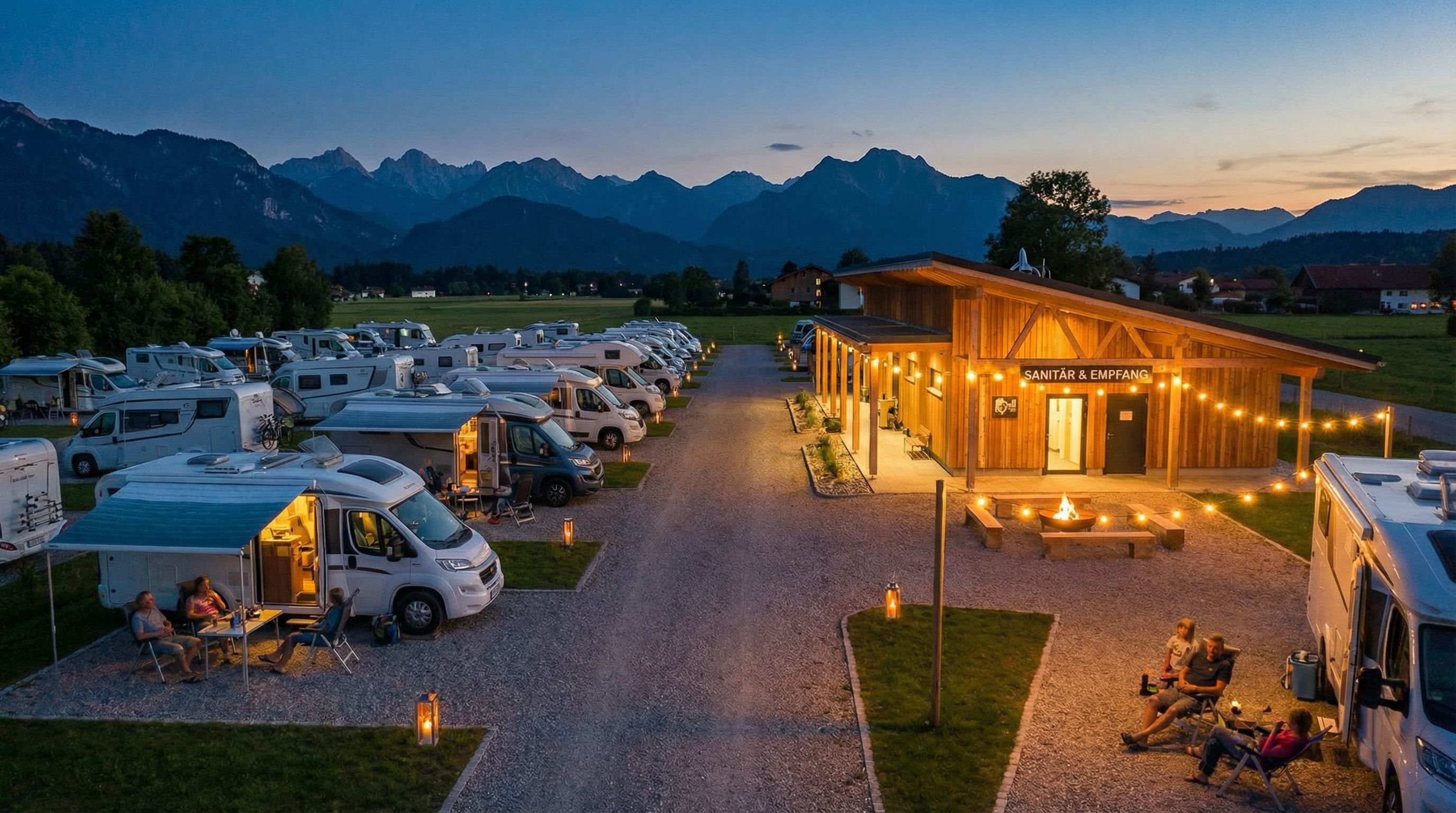 German Stellplätze offer a legal, well-equipped alternative to wild camping — with over 3,500 locations nationwide.
| Allowed | Prohibited |
|---|---|
| One night on private land (with permission) | Public land overnight |
| Designated Stellplätze | Roadside parking overnight |
| Rest stops (driving safety only) | Nature reserves, forests |
Alternative: Germany has over 3,500 Stellplätze — designated motorhome areas similar to French aires.
Netherlands
- Wild camping prohibited
- Good network of camperplaatsen (motorhome areas)
- Enforcement relatively strict
Belgium
- Prohibited in most regions
- Flanders and Wallonia have different rules
- Use designated aires or campsites
UK
Complex regional rules:
| Region | Status |
|---|---|
| England & Wales | Prohibited without landowner permission |
| Scotland | Limited wild camping rights (not motorhomes) |
| Northern Ireland | Prohibited |
Exception: Dartmoor National Park in England allows some wild camping, but with specific location restrictions.
Southern Europe
Portugal
Since July 2021, Portugal has specific rules for motorhomes:
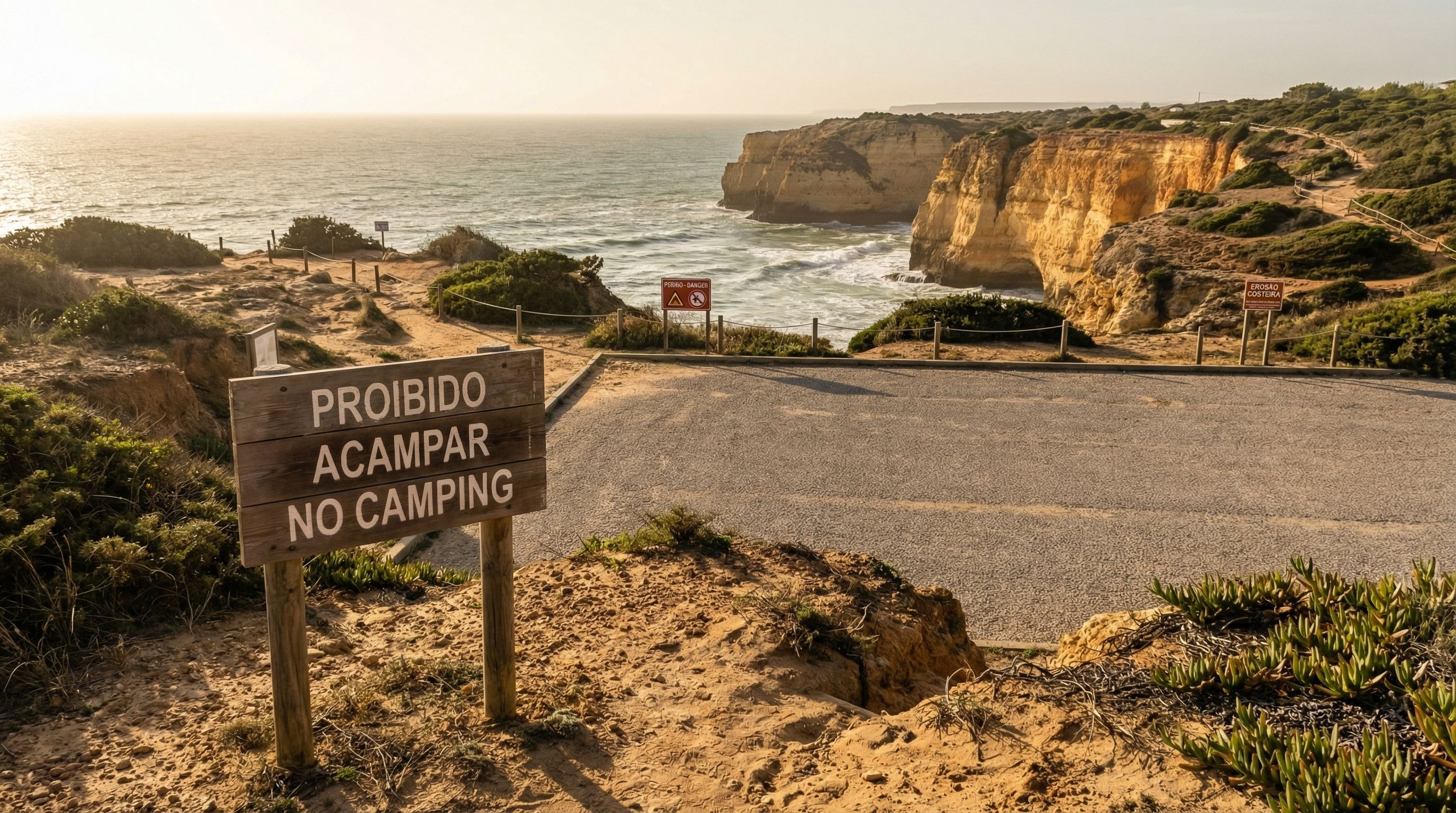 Portugal's stunning Algarve coast is now off-limits for overnight campervan parking — use designated areas instead.
| Allowed | Prohibited |
|---|---|
| Public land parking up to 48 hours | Natura 2000 areas |
| Self-contained vehicles only | Coastal areas |
| Same municipality | National parks |
| No external equipment | Beach parking |
Important: You must stay inside your vehicle. Setting up awnings, chairs, or tables is prohibited.
Spain
- Wild camping broadly prohibited
- National parks strictly enforced
- Beaches and coastal areas forbidden
- Some inland tolerance, but legally risky
Regional variation: Autonomous communities have different enforcement levels. Andalusia is stricter than inland Castile.
Italy
Varies significantly by region:
| Region | Status |
|---|---|
| South Tyrol | Strictly prohibited |
| Abruzzo, Liguria, Puglia, Sicily | Designated areas only |
| Basilicata, Marche | Written permit required |
| Most other regions | Prohibited, varying enforcement |
Best approach: Use Italy's "sosta camper" areas — similar to aires but less common.
Greece — NEW 2025 RESTRICTIONS
Major change: Law 5170/2025 (effective January 20, 2025) imposed some of Europe's strictest campervan regulations.
| Now Prohibited |
|---|
| Overnight parking on beaches |
| Parking in forests |
| Archaeological site areas |
| Public/municipal parking lots |
Fines are severe and enforcement has increased significantly. Use designated camping areas only.
Croatia
- Wild camping strictly prohibited
- Applies to tents, motorhomes, and all vehicles
- Enforcement is active, especially on coast
- Fines can be substantial
Central & Eastern Europe
Austria
- Wild camping prohibited
- Good Stellplatz network
- One-night roadside rest stops sometimes tolerated
Switzerland
- Prohibited in most cantons
- Very limited designated areas
- Expensive but beautiful camping options
Czech Republic
- Prohibited on public land
- Private land with permission only
- Enforcement varies
Poland
- Wild camping generally prohibited
- Increasing number of designated camping spots
- Rural areas more tolerant
Slovenia
- Prohibited
- Fines up to €400
- Use campsites or designated areas
The "One Night Rule" Myth
Many sources claim you can park "one night to restore driving ability" anywhere in Europe. This is misleading.
The rule exists in some countries but:
- Only applies to genuine driver fatigue
- Cannot be used as a loophole for tourism
- Setting up any camping equipment negates the excuse
- Multiple consecutive stops violate the spirit of the law
Our advice: Don't rely on this excuse. Use proper aires, Stellplätze, or campsites.
Tips for Staying Legal
- Download offline maps of aires/Stellplätze before your trip
- Arrive early — popular spots fill by afternoon in peak season
- Keep a small footprint — no awnings, minimal outdoor furniture
- Move daily — never stay more than one night in the same spot
- Respect "no camping" signs — they're there for a reason
- Have a backup plan — know the nearest campsite if you can't find an aire
Apps for Finding Legal Overnight Spots
| App | Best For | Offline |
|---|---|---|
| Park4Night | All Europe | Yes |
| Campercontact | Germany/BeNeLux | Yes |
| RoamLife | Smart recommendations | Coming soon |
Frequently Asked Questions
Is wild camping the same as free camping? Not exactly. "Wild camping" means parking outside designated areas (usually illegal). "Free camping" can include free aires and Stellplätze, which are legal.
Can I sleep in my vehicle in a regular car park? Rarely legal. Most European countries prohibit overnight parking in public car parks, though enforcement varies.
What about rest stops on highways? Motorway service areas (Autobahn Raststätten, aires d'autoroute) are legal to park but strongly discouraged due to theft risks. Exit the motorway and use dedicated aires instead.
Do I need to worry about wild camping fines? Yes. Germany issues fines up to €500, Greece and Portugal are now strictly enforced, and southern European countries are tightening regulations. It's not worth the risk.
Is wild camping safer than aires? Generally no. Aires offer designated spaces with some oversight. Isolated wild spots can be targets for theft.
What's the penalty for wild camping in a national park? Varies by country, but fines are typically higher in protected areas. Some countries treat it as a criminal offense rather than just a fine.
Last updated: January 2026
Sources:


